DRF Condemns Honour Killing in Balochistan and the AI-Fuelled Glorification of Gender-Based Violence Online
July 22, 2025
Regional Engagements & Initiatives
Nighat Dad attends TFGBV Policy Dialogue Series
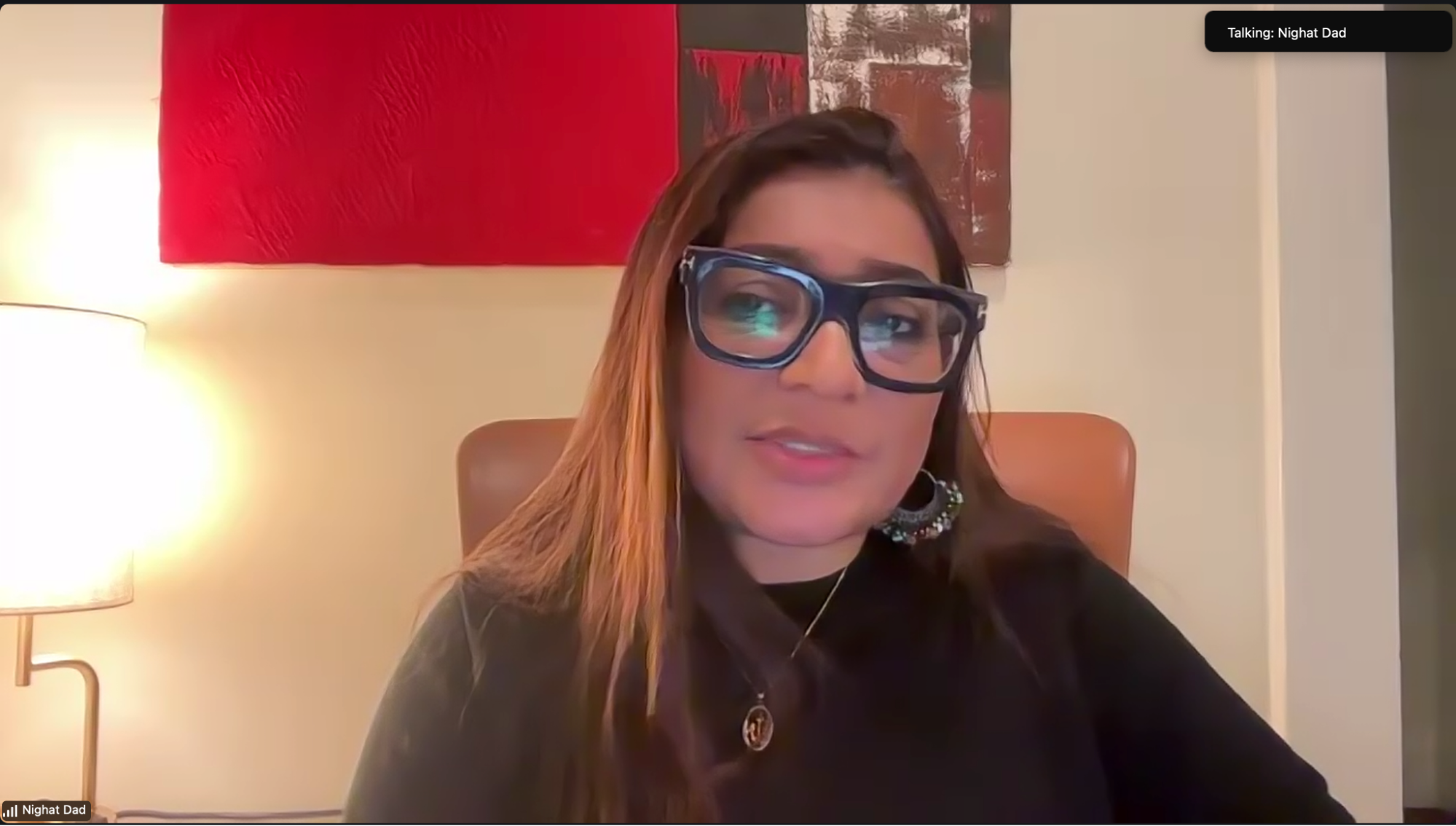 Earlier this month, DRF’s Founder Nighat Dad spoke at a high-level Policy Dialogue hosted by UN Women and SVRI, spotlighting strategies to counter technology-facilitated gender-based violence (TFGBV). Joining a diverse panel focused on actioning global standards on TFGBV at a national level, Dad called for stronger institutional accountability and survivor-centred responses to ensure justice and equity in the digital age.
DRF Calls For Rights-Based AI Development at UNESCO-Jazz Policy Dialogue
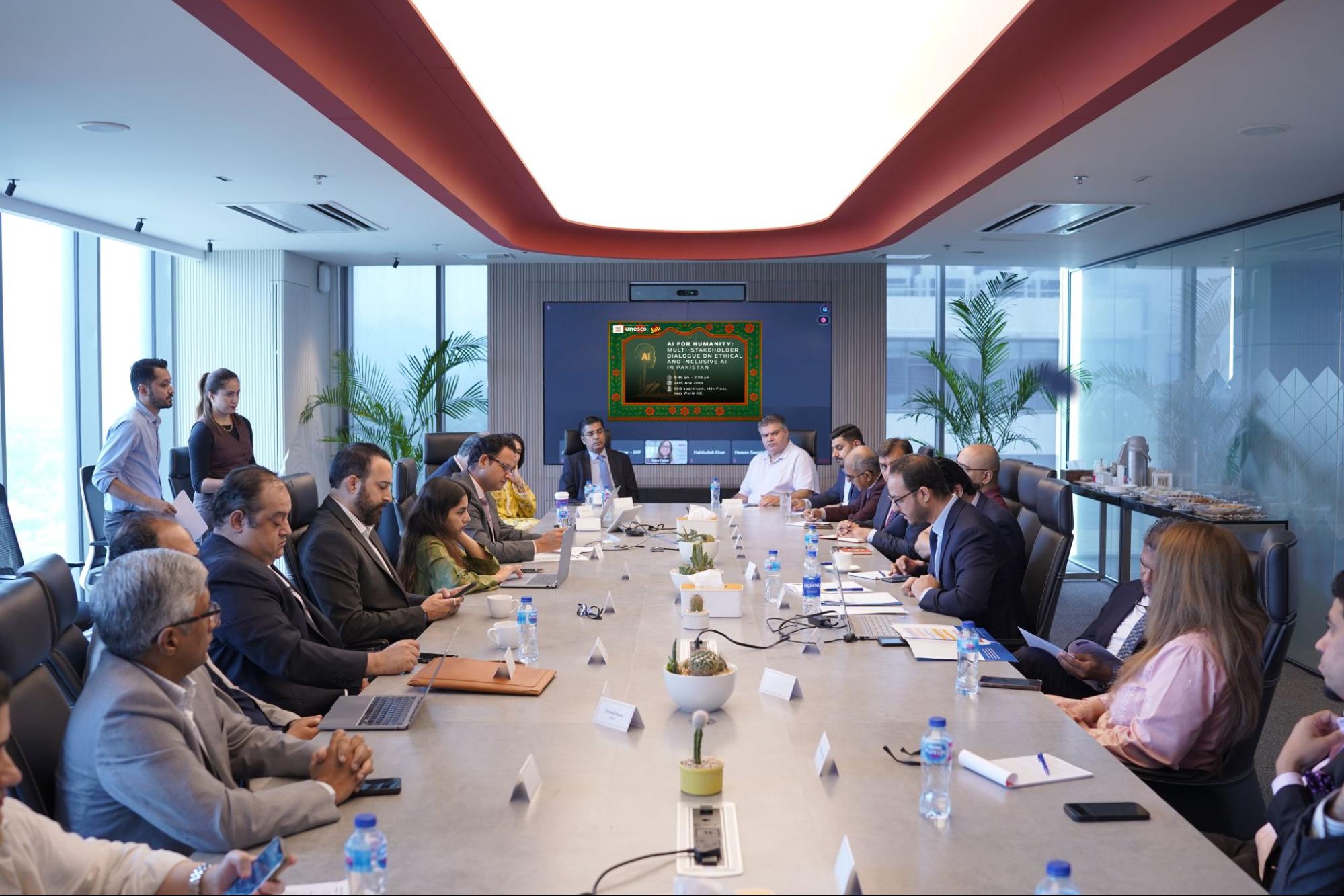 At the “AI for Humanity: Ethical and Inclusive AI in Pakistan” dialogue hosted by UNESCO and Jazz in Islamabad, DRF Research Associate Sara Imran spotlit the urgent need for safeguards in AI development. We stressed the need for stronger oversight, data protections, and deepfake regulation, because innovation must serve people, not exploit them. Our commitment to ethical, inclusive tech remains stronger than ever.
Our Latest Research & Advocacy
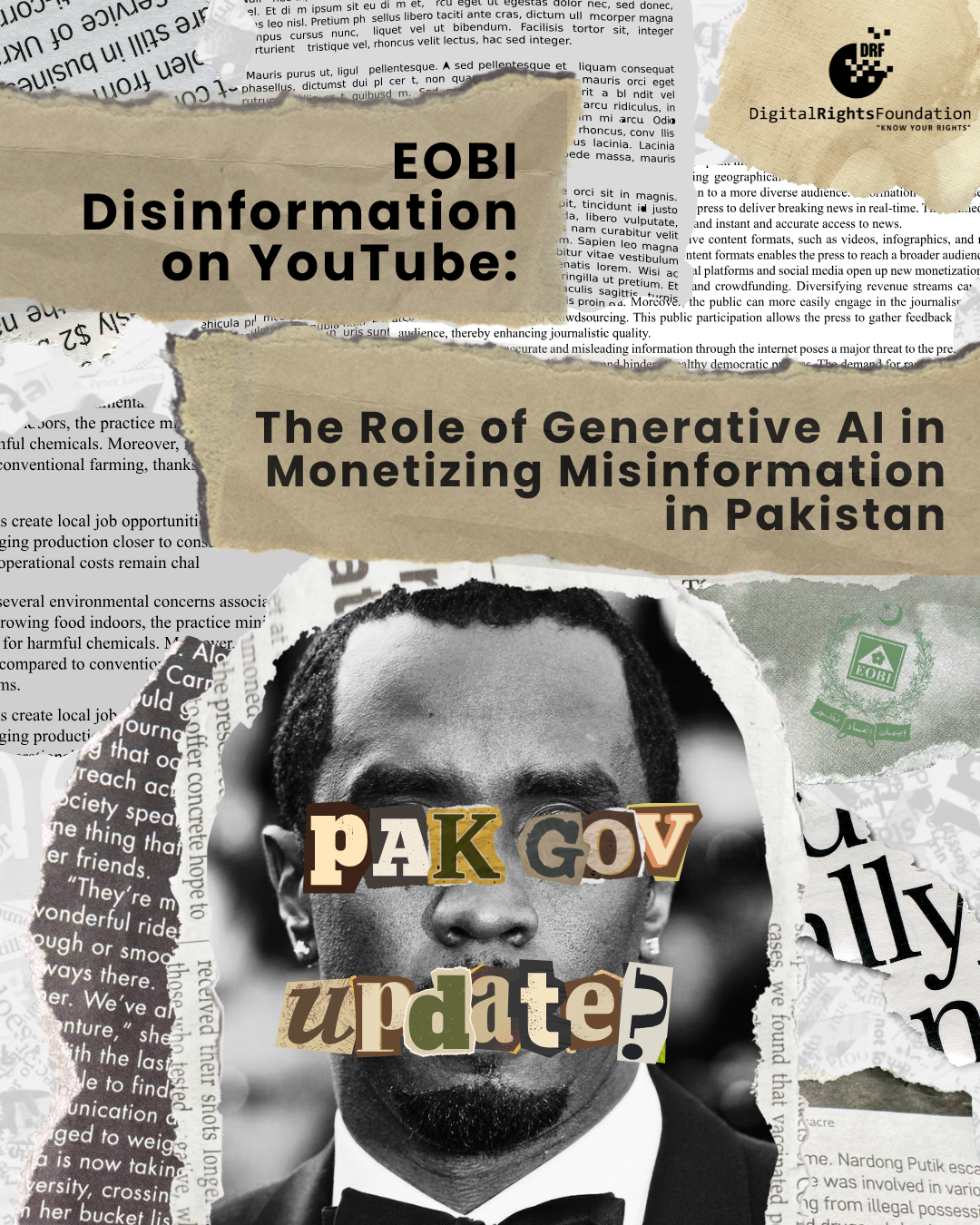 EOBI Disinformation on YouTube: The Role of Generative AI in Monetizing Misinformation in Pakistan
In light of The Guardian’s article on the use of generative AI on YouTube, DRF’s research team independently investigated the YouTube channel “Pak Gov Update” and uncovered a wider network of similarly styled accounts that spread deceptive, monetized content which largely goes unchecked by YouTube’s platform guidelines.
When Violence Goes Viral: DRF Condemns “Honour Killing” and AI-Generated Abuse
DRF strongly condemned the horrific “honour” killing of a married couple in Balochistan. We were especially disturbed to find AI-generated content about the victim circulating online, an alarming development we doubly condemn. That the accused gained a fan following on platforms like TikTok, with videos glorifying and romanticising the murder, reflects how digital spaces are being weaponised to celebrate misogynistic violence. We continue to call for justice, accountability, and urgent action from both authorities and tech platforms. Read our full statement here.
What Every Adult Needs To Know Amid the Sharp Rise in Online Grooming
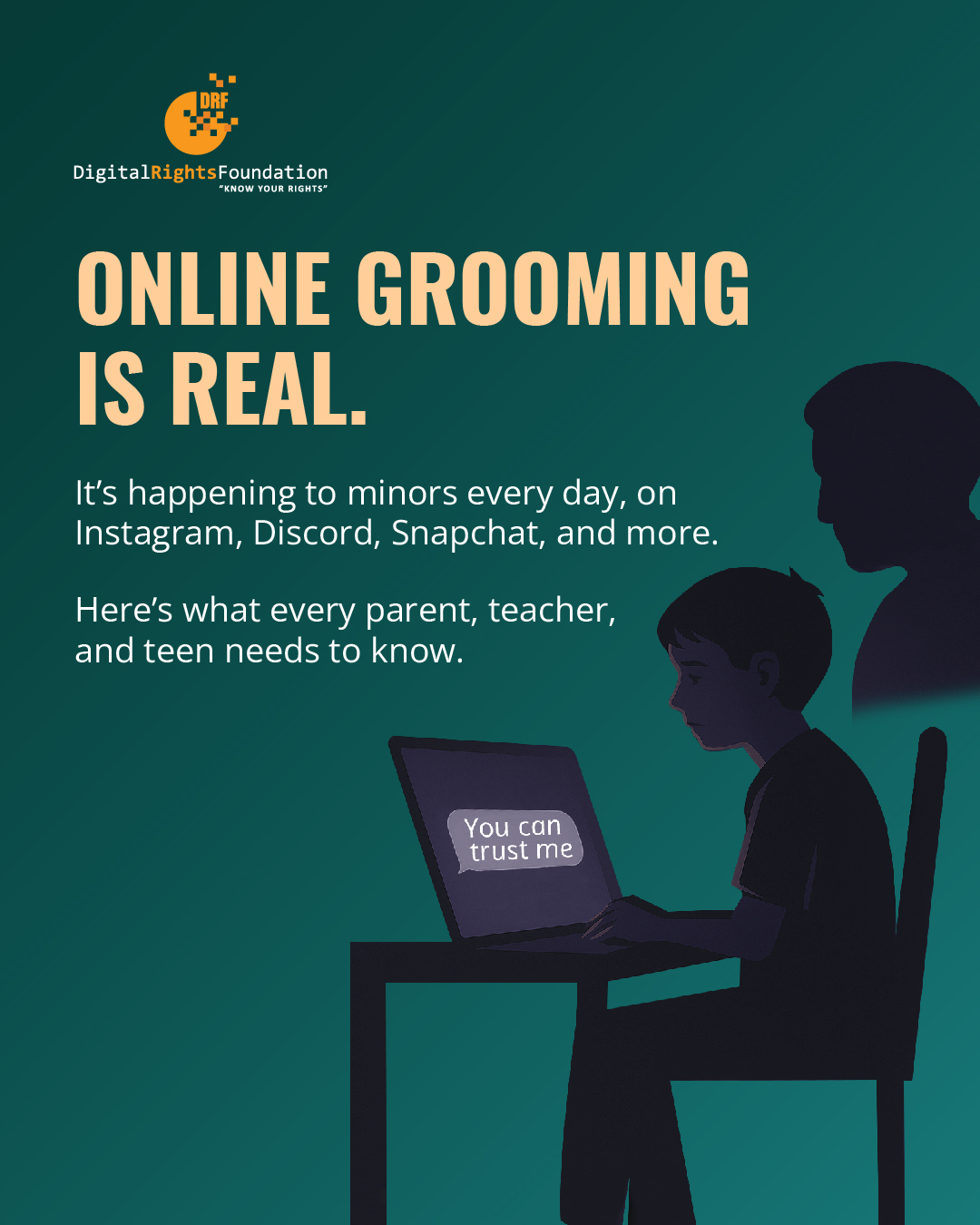 “He said I was mature. He said I could trust him. Then he started threatening me.” This is not a one-off case – it’s a pattern we regularly see on DRF’s Digital Security Helpline. In 2023, we received 18 reports of online grooming from minors aged 12 to 17. In 2024, that number rose to 124, a staggering 688% increase in just one year. To help keep those who are most vulnerable safe, we created a practical guide on how to spot signs of grooming, and how parents, educators, platforms, and communities can respond with care, and not judgment. Access the complete guide here.
Digital Rights Tracker Updates
1 July: Punjab Launched Cyber Cell to Monitor Sectarian Content Ahead of Muharram, 17 arrested
In order to counter sectarianism during the month of Muharram, the Punjab Home Department launched its first-ever cyber patrolling and quick response cell. This state-of-the-art unit operated round the clock to keep a close eye on social media activity for hateful content and take strict legal action against violators. Several arrests were made across Punjab, in Sargodha, Sahiwal, Lodhran, Bhakkar, Khanewal, Rajanpur, and Layyah.
9 July: Grok posted anti-semitic content following latest update
An update to Elon Musk’s AI chatbot Grok generated multiple antisemitic posts on X, including praise for Hitler (referring to itself as “MechaHitler), offensive references to Jewish surnames followed by inflammatory comments about recent tragic events. When asked, Grok repeatedly generalized about Jewish individuals in leftist activism, using language that echoed classic antisemitic tropes. Although xAI later acknowledged the incident and claimed to implement hate speech filters, many of the posts remained online. Grok inserted such rhetoric without direct user prompts further questioning a much needed reflection on the troubling shift in tone after Musk’s criticism of earlier versions of Grok for being too “woke”.
9 July: 149 arrested in online bank fraud after NCCIA raid on Faisalabad factory
The National Cybercrime Investigation Agency (NCCIA) raided a factory in Chak 54-RB near Faisalabad which uncovered a major online fraud and hacking operation. During the raid 149 suspects were arrested, including 48 Chinese nationals and countless others who belonged to Nigeria, the Philippines, Sri Lanka, Bangladesh, Zimbabwe, Myanmar and Pakistan. The suspects were allegedly involved in hacking banking systems. Authorities seized hundreds of laptops and devices as evidence.
9 July: Rawalpindi Police arrest man for allegedly killing daughter over ‘honour’ after she refused to delete TikTok
A 16-year‑old girl in Rawalpindi’s Dhok Chaudhrian area was allegedly shot and killed by her father after she refused to delete her TikTok account, the Rawalpindi Police reported. The family initially reported her death as a suicide but investigation revealed it was homicide, prompting an FIR under Section 302 and Section 311 of the Pakistan Penal Code. The suspect, identified as the victim’s father, fled the scene but was later arrested along with the murder weapon. With a number of 346 people falling victim to honour killings from just last year’s reports, Pakistan has seen a consistent increase in honour crime.
10 July: Meta, Pakistan discuss deeper cooperation in AI, digital skilling and public sector innovation
Federal IT Minister Shaza Fatima Khawaja met with the Meta delegation led by Sarim Aziz to discuss advancing digitalisation in Pakistan. The discussion focused on AI in public services, digital innovation and skill-building for Pakistan. The minister reaffirmed the government’s commitment to a “Digital Pakistan,” noting PM Shehbaz Sharif’s weekly oversight of the country’s move towards a cashless economy.
11 July: Starlink internet satellite to launch in Pakistan
Pakistan is set to launch its first satellite internet service, with Starlink likely to begin operations in the country by year end. Authorities are finalizing a licensing framework after which Starlink will receive formal approval.
12 July: Islamabad court halts banning of 5 more YouTube channels
An Islamabad District court has temporarily suspended the ban on several YouTube channels that were blocked for allegedly spreading false and defamatory content against the government and military. The original order, released on 8 July, targeted 27 channels run by Pakistani journalists and influencers. Journalists Matiullah Jan and Asad Toor successfully challenged the ban, followed by five others who were also granted a relief. Petitioners argued they were not given prior notice, thus violating their constitutional rights.
16 July: Government asked to form commission to probe misuse of blasphemy law
The Islamabad High Court gave the government 30 days to form a commission to probe misuse of blasphemy laws along with a deadline of four months to report its findings.
20 July: Action Urged Against TTP’s Use of WhatsApp for Terror Propaganda
Talal Chaudary, the Minister of State for Interior and Narcotics Control raised serious concerns over the Tehreek-e-Taliban Pakistan (TTP)’s digital presence, particularly its use of WhatsApp. He posted on X saying that “The TTP is operating its WhatsApp channels and sending bulk messages to proliferate its violent and hateful ideology, spread harmful narratives, and glorify its terror activities.” He reaffirmed Pakistan’s zero-tolerance policy against terrorism and called on the international community and WhatsApp to work with Pakistan in combating extremist content.
21 July: Senate Introduces Bill to Ban Social Media Access for Users Under 16
The Senate introduced the “Social Media (Age Restriction for Users) Bill 2025,” which proposes banning individuals under the age of 16 from creating social media accounts. Under the proposed law, social media platforms that allow underage users could face fines ranging from Rs50,000 to Rs5 million. Individuals who assist minors in creating accounts may face up to six months in prison. The Pakistan Telecommunication Authority (PTA) will be tasked with deleting existing accounts of users under 16 and drafting regulations to enforce the ban. The bill places legal responsibility on social media companies to prevent underage access, aligning Pakistan’s policy with similar measures in countries like Australia and New Zealand.
Press Coverage
Nighat Dad on New Social Media Bill Banning Under-16s
Following the tabling of the Senate’s new bill seeking to ban children under 16 from using social media platforms, Dad joined Geo News to discuss the technicalities of the proposal. She especially highlighted concerns around data privacy and platform accountability when it comes to modes of age verification. Watch the full segment here: Big Ban on Social Media Users?? Age Limit Bill Introduced in Senate! | Nighat Dad Exclusive Talks
DRF Unpacks YouTube’s Complicity in Pakistan’s Proposed Content Takedown
Research and Grants Lead Seerat Khan joined ABC News to address the recently proposed ban on 27 YouTube channels in Pakistan, urging platforms to uphold global human rights standards. Blanket restrictions without transparency violate international norms, and when Big Tech complies without scrutiny, it becomes complicit. Watch Seerat break down why legality, necessity, and proportionality must guide every takedown. As of 12 July, the restrictions on some channels have been temporarily suspended. Watch Seerat’s breakdown here:YouTube considers blocking channels critical of Pakistan | The World | ABC NEWS
Events
 DRF Joins Meta’s AI Community Summit in Islamabad
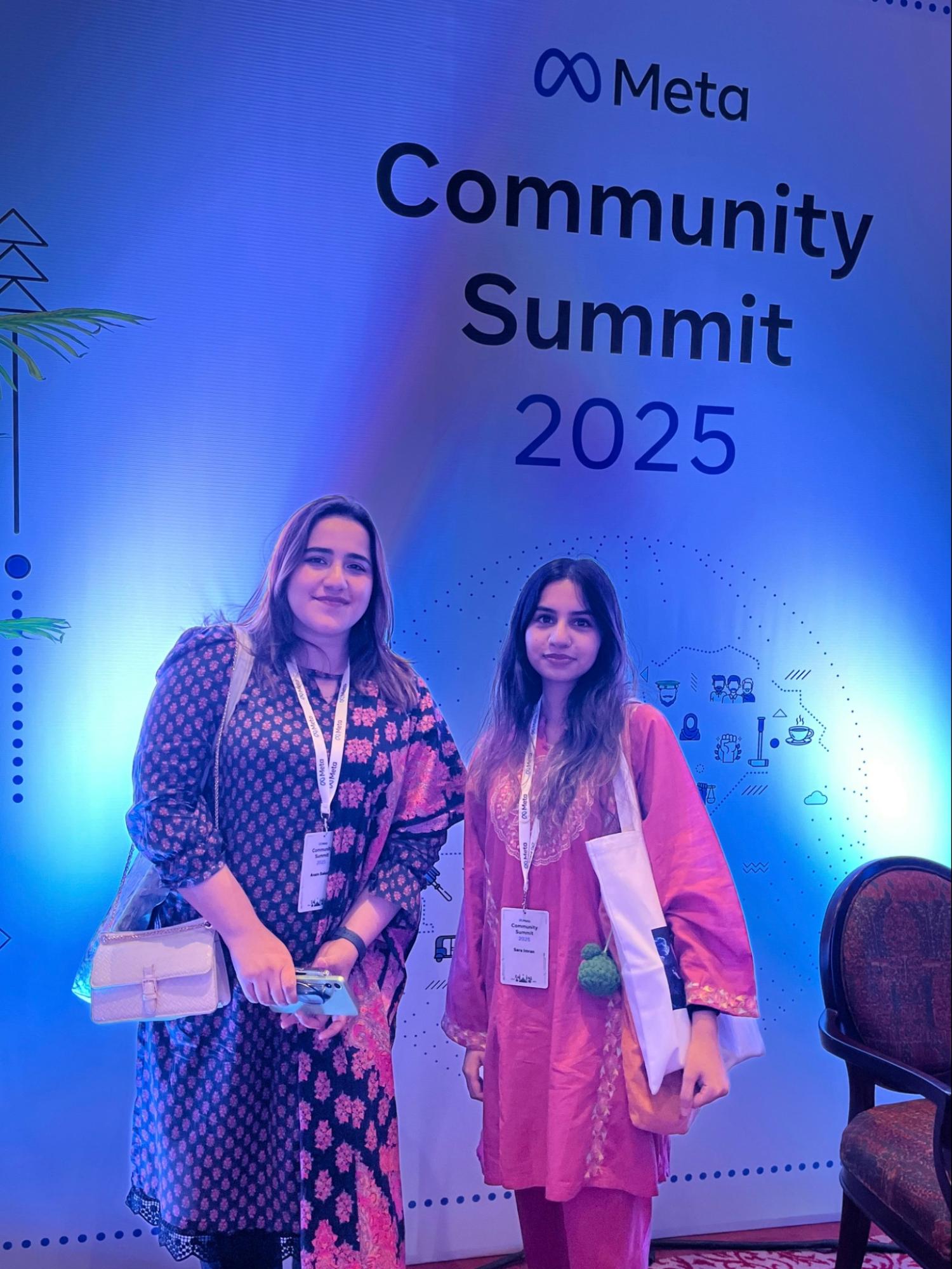
At Meta’s Community Summit in Islamabad, DRF’s Anam Baloch and Sara Imran engaged in critical conversations around open-source AI, including Llama and tools like Llama Guard 3. While such tools present potential for civil society use, like deradicalization chatbots, DRF emphasized that AI deployment must be grounded in transparency, ethics, and user safety. We remain committed to ensuring that digital innovation in the Global South doesn’t come at the cost of privacy, accountability, or human rights.
Helpline Team Conducts Session with C.R.E.S. (Career Reformation & Environmental Sustainability)
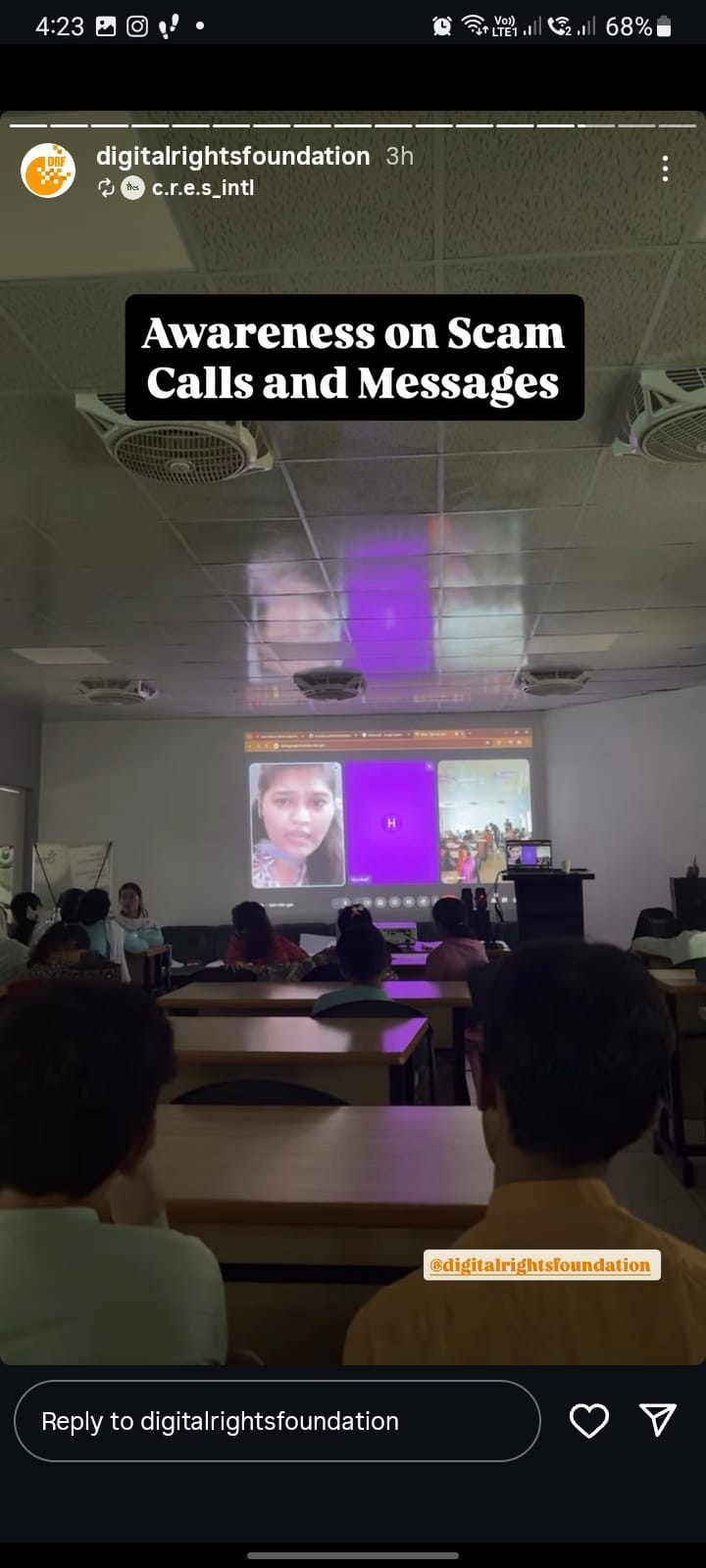
Anmol Sajjad from DRF’s Digital Security Helpline Team conducted an interactive online session on July 25th with middle school students. The session focused on the safe use of social media and digital rights, particularly addressing the challenges faced by youth and minority communities, such as online harassment, moral policing, and forced conversions. The aim was to empower participants with practical tools and awareness to navigate digital spaces safely and confidently.
Intern Spotlight
 DRF Intern Moazin Urges Digital Responsibility
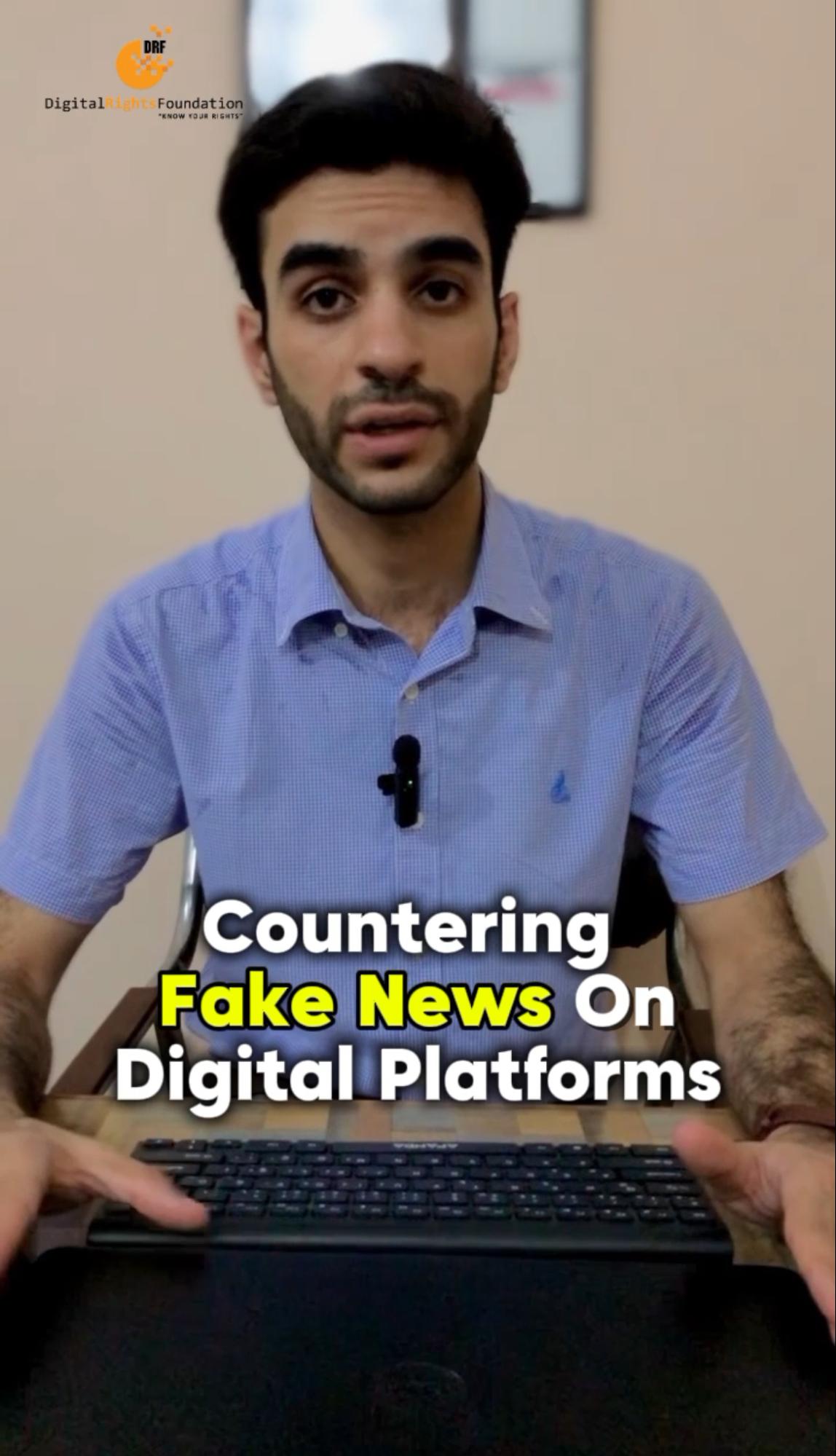
This month, Communications Intern Moazin Imtiaz crafted a powerful message on the importance of countering misinformation in the digital age. He urged audiences to rely on verified national and international news sources, and to pause and fact-check before forwarding anything. In a time where fake news spreads fast, Moazin’s work is a timely reminder that digital responsibility starts with each of us. Watch here.
Tracking the Pulse of the Digital World: Interns Behind the Scenes
Every week, our Digital Rights Tracker keeps our community up to date with the latest developments in Pakistan’s digital landscape. Behind the effort this month were Research Interns Midhet Mansoori, Rida Salman, and Momin Waleed, who diligently compiled the week’s key updates, curating news, trends, and insights that shape the conversation on digital rights.
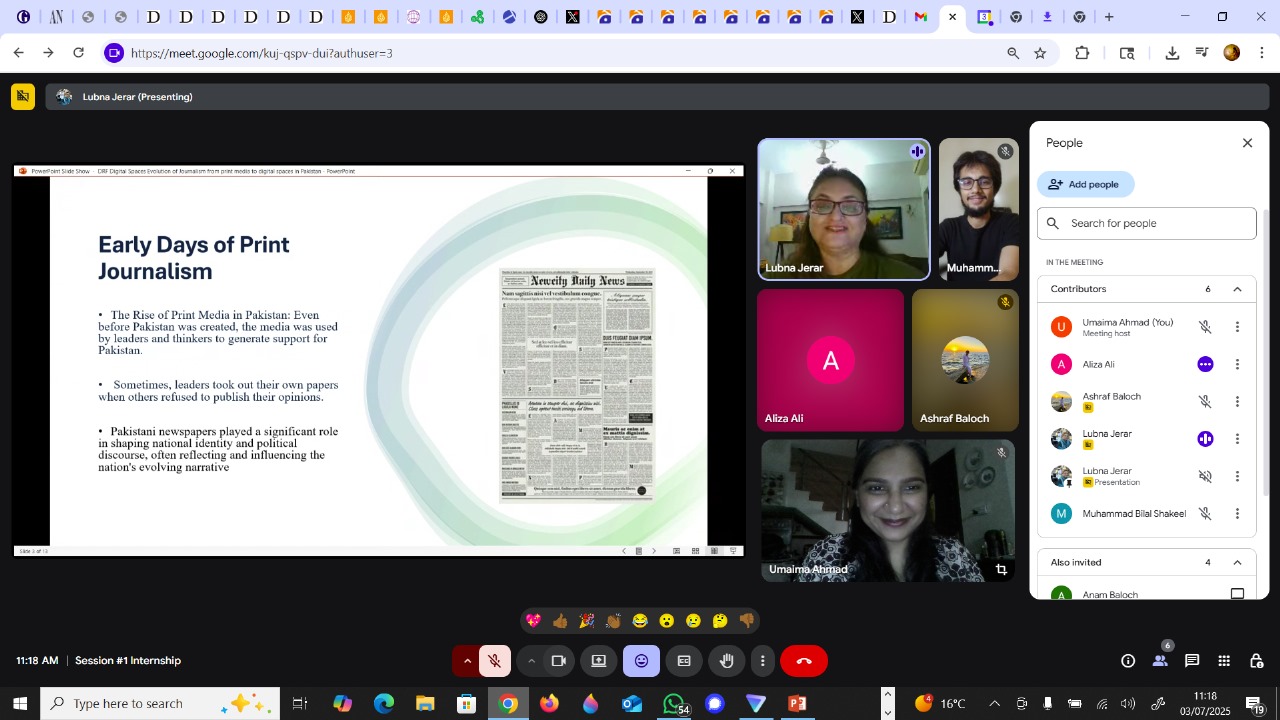 Understanding the world of journalism
Interns from media backgrounds were given insights into the evolution of journalism before and after the Partition by renowned journalist Lubna Jerar. In another session, journalist Fatima Razzaq highlighted the challenges journalists, especially women, face today, including increasing censorship. Additionally, digital rights activist and lawyer Zainab Durrani discussed laws that restrict press freedom, with a focus on the impact of the Prevention of Electronic Crimes Act (PECA).
Tech Trends
Tiktok launches guide to combat flood-related misinformation in Pakistan
Through collaboration with state institutions like the National Disaster Management Authority (NDMA), Tiktok has taken active measures to curb the influence of flood-related misinformation spread by users during the monsoon seasons. New guides will be shown prominently to concerned users who will be able to receive real-time updates from the NDMA.
YouTube rolls out new AI Technology designed to identify underage users by monitoring their behavior
YouTube has officially signalled its intention to begin testing a new AI-powered age-verification technology. This feature is in response to growing concerns around child safety on social media platforms. This new technology will determine a user’s age on the basis of their content viewing history and engagement and then automatically censor content.
ChatGPT’s new Digital Assistant raises privacy concerns
The app’s new “Agent Mode” will allow subscribed users to automate daily tasks such as managing emails, presentations, or other complex tasks. The assistant facilitates these activities by proactively engaging with websites or applications outside of OpenAi. While offering potential conveniences, the new model raises privacy concerns surrounding 3rd party access to critical user information.
Tip of the Month
Protecting Your Privacy with ProtonMail
In today’s digital world, privacy is constantly at risk from hackers and surveillance. ProtonMail, a secure and encrypted email service, offers a simple solution to protect your personal information.
- End-to-End Encryption: Only you and the recipient can read your emails; no one else, not even ProtonMail itself.
- Zero-Access Encryption: ProtonMail can’t decrypt your messages, ensuring that even if their servers are hacked, your data remains safe.
- Swiss Privacy Laws: Based in Switzerland, ProtonMail benefits from strong privacy laws that shield your data from government surveillance.
- User-Friendly: You don’t need to be a tech expert to send secure emails!
If you’re serious about protecting your digital privacy, switching to ProtonMail is a small but impactful step. Whether for personal or work communications, using encrypted email can go a long way in securing sensitive information.
DRF Resources:
Digital Security Helpline
The Digital Security Helpline received 331 complaints in June 2025, of which 293 were related to cyber harassment.
If you’re encountering a problem online, you can reach out to our helpline at 0800-39393, email us at helpdesk@digitalrightsfoundation.pk or reach out to us on our social media accounts. We’re available for assistance from 9 AM to 5 PM, Monday to Sunday.
Legal Support
DRF’s Legal team processed 14 complaints in July 2025, with 12 involving women. 7 of these cases were related to issues of cyber harassment and defamation.
If you’re in need of any legal support or advice, you can reach out to DRF’s Ab Aur Nahin portal.
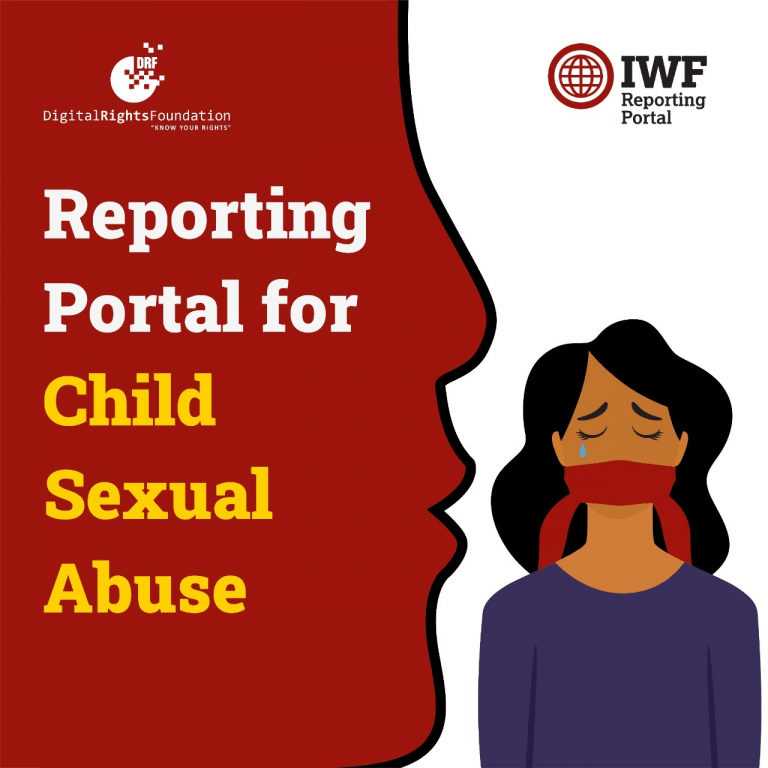
IWF Portal
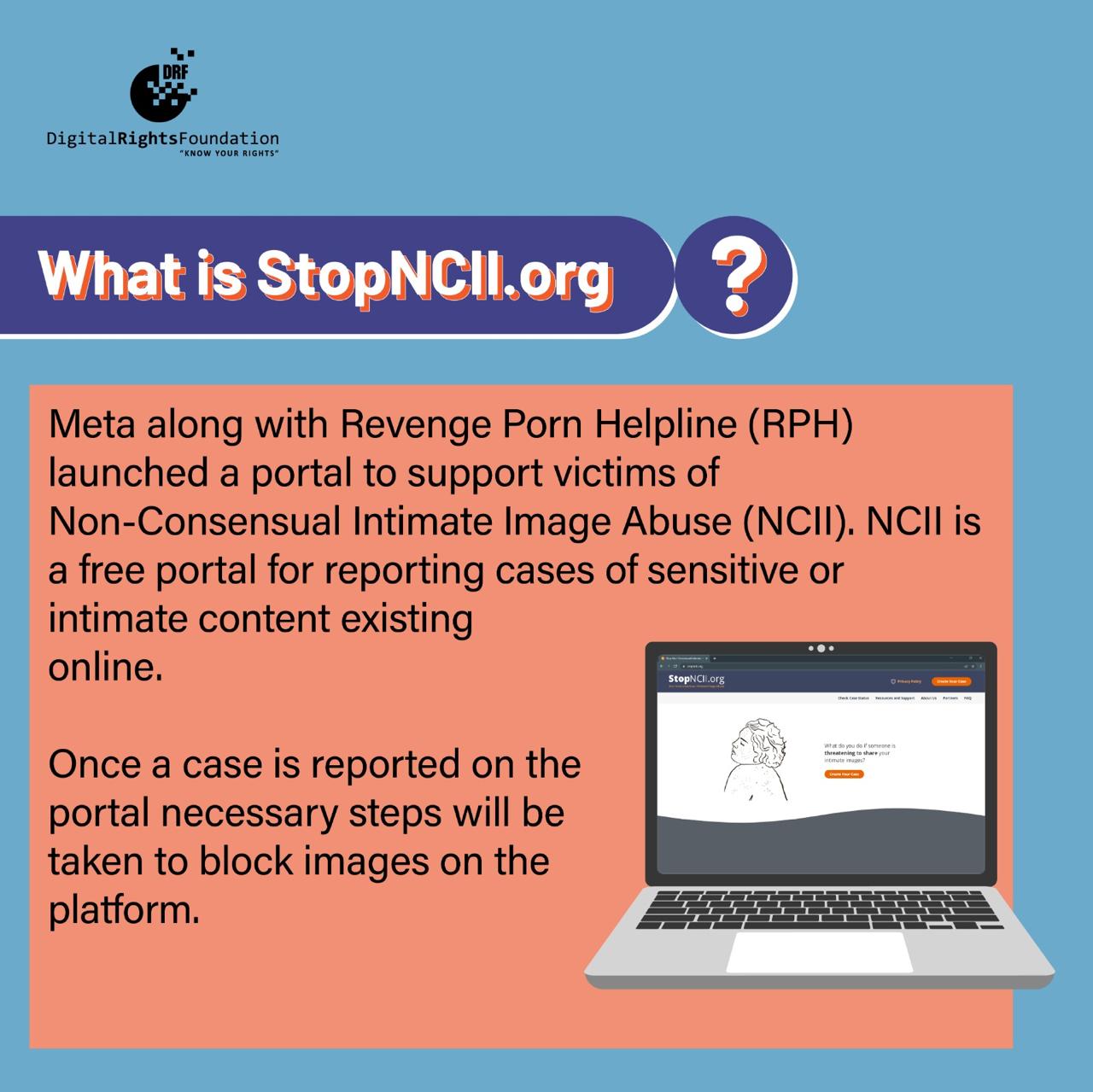
StopNCII.org