
From Censorship to Cyberhate: The Digital Siege on Balochistan By Asma Tariq
June 19, 2025Women morning show hosts from Khyber Pakhtunkhwa face online hate speech on a daily basis by Nazia Salarzai
June 19, 2025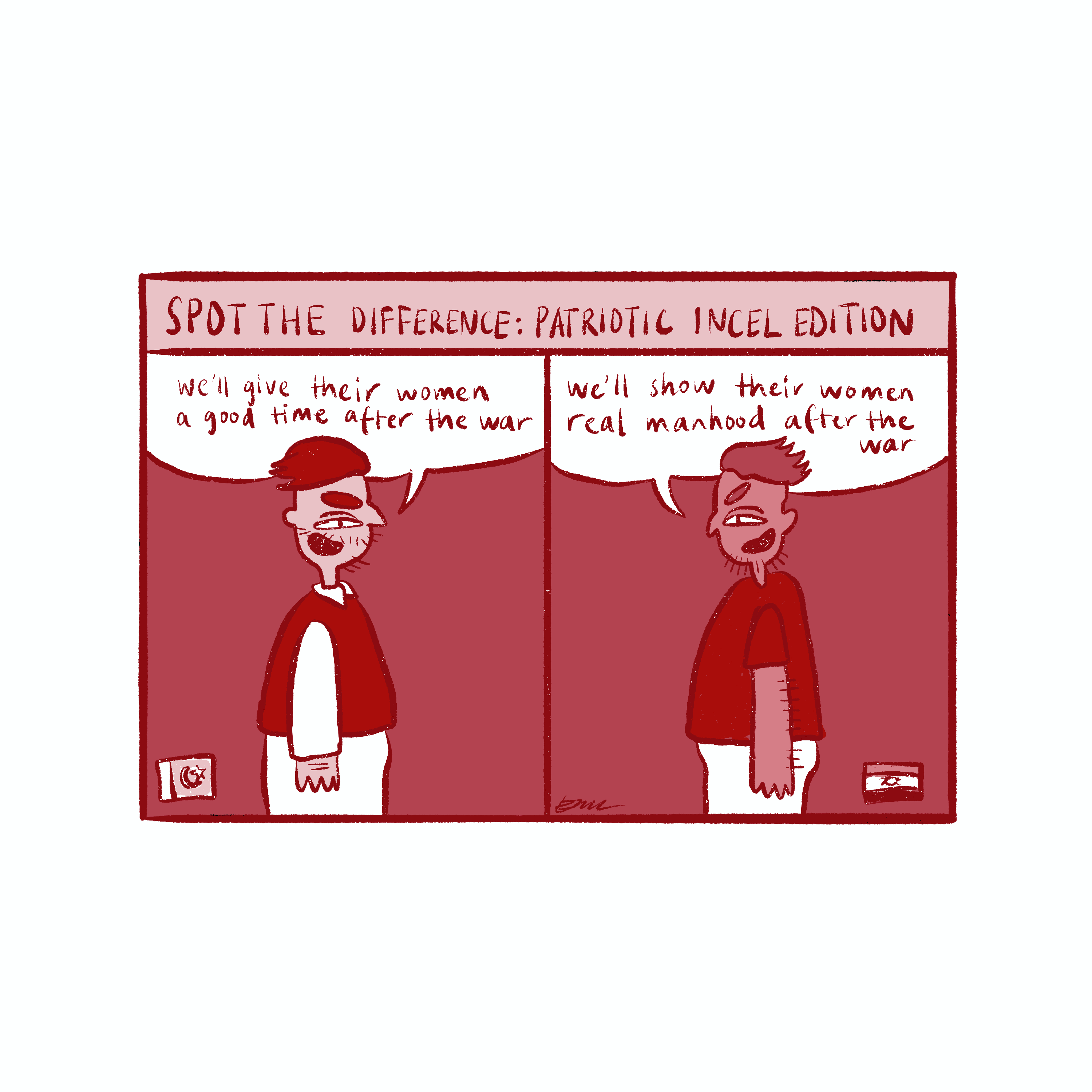
In recent years, populist politics have increased in tandem with hate speech, especially on social media platforms. The fusion of hate speech and populism has made digital media platforms a volatile space where hate speech thrives unchecked. Across national contexts, populist leaders and their online supporters have weaponized online spaces to normalize misogyny, racism, and religious bigotry. From dog-whistle politics to outright slurs, gendered and communal hate is amplified in algorithmic echo chambers that reward outrage and division.
This dangerous convergence became starkly visible in the aftermath of the Pahalgam attack in May 2025, when India blamed Pakistan for the violence without credible evidence. What followed was not just a military standoff, but a digital war marked by an explosion of online hate. Indian social media platforms were flooded with anti-Pakistan slurs, Islamophobic hashtags, and gendered abuse by right-wing influencers, political accounts, and even mainstream media figures. This article explores the patterns of hate speech in South Asia as well as around the world, where populist leaders have increasingly relied on inflammatory rhetoric during elections to mobilize support and delegitimize opponents.
During the recent India-Pakistan standoff, Indians and Pakistanis clashed on social media. While militaries exchanged missiles and cross-fires across the border, citizens of India and Pakistan attacked each other using pejorative and discriminatory language, with most such attacks being rooted in misogyny and racism. Hence, social media descended into hate speech and Online Gender-Based Violence. According to Foundation the London Story’s Escalate report, “the conflict’s intensity was exacerbated by the rapid dissemination of hate speech and war frenzy on social media, where nationalistic fervour and inflammatory rhetoric spread unchecked.” A study by the Digital Rights Foundation further revealed that out of the 295 posts analyzed regarding the conflict, 25% were found to spread gendered disinformation, technology-facilitated gender-based violence (TFGBV), and gendered hate speech.
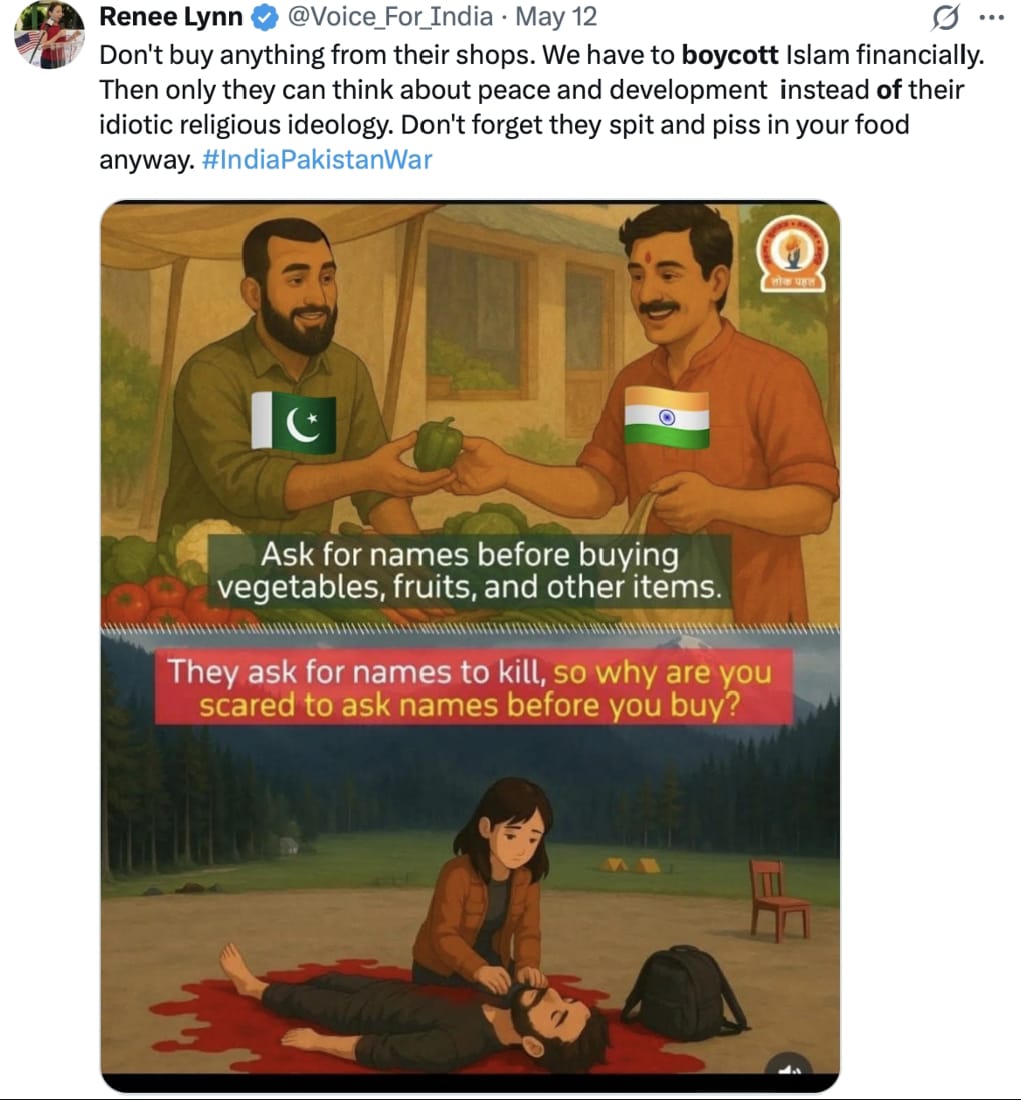
After the Pahalgam attack and during Operation Sindhoor, the Hindutva trolls attacked both Pakistani and Indian Muslims using racist and sexist slurs. Some accounts called for the financial boycott of Muslims with the hashtag BoycottMuslims while others started glorifying the character of Brigadier Pratap Singh from the movie Shaurya; the said character displaying no remorse in killing Muslims. An X (formerly Twitter) account user shared the character’s photo with a caption that implied Muslims in both Pakistan and India are state enemies. The X post below shows how users spread communal hatred by alleging that Muslims spit in the food they give to Hindus. Pakistanis’ mocked Hindus by saying that they drink cow piss. One person shared a person holding a cow urine cola to humiliate Hindus.
Someone who holds misogynistic views considers it an insult to call a man a woman. One X user shared a feminized picture of Pakistan’s Army Chief with Sindhoor to show contempt for both the army chief and women.
Following Turkey’s support of Pakistan during the conflict, a boycott campaign against Turkey ensued, driven by social media outrage. Multiple people called for a trade and travel boycott of the country, while another user made sexually explicit comments about Turkish women, which left people aghast.
It wasn’t only Muslims who faced the fury of ideologically driven hatred. For merely leading the press briefings of Operation Sindoor, India’s Foreign Minister Vikram Misri was trolled, and his daughter became a victim of hate speech, doxxing, and received threats of sexual violence. An X account disclosed the details of Misri’s daughter and highlighted the fact that she is a contributor to The Wire, a progressive news website from India, which is critical of the Modi regime. The surge of hateful comments resulted in the foreign minister making his account on X private. One user even went as far as to call for the termination of Vikram Misri because of his daughter’s support for Rohingya Muslims.
Equally alarming is when a survivor of the Pahalgam attack, Himanshi Narwal, was harshly trolled on social media when she called for peace and non-violence against Kashmiris and Muslims. Some people questioned if she had links with terrorists, and one user implied that she orchestrated her husband’s death by planning to go to Kashmir.
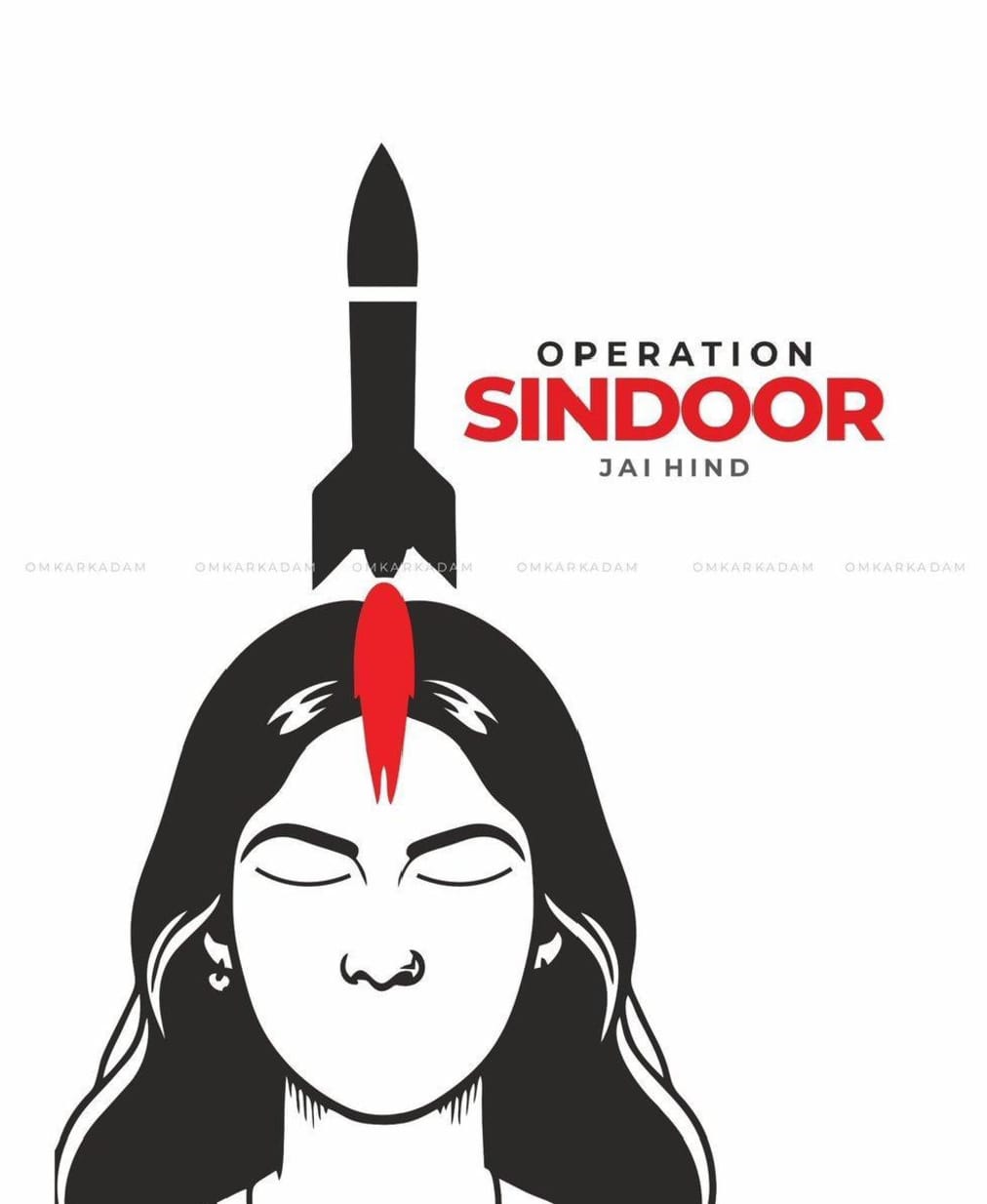
While online gendered hate speech and racism continued in tandem with gendered disinformation by state-backed media and BJP politicians, creating a religious divide, feminism was weaponized to get the approval of the masses. The Indian government militarized the vermilion powder that married Hindu women apply as a ritual in the name of avenging the grief of widows who lost their husbands in the Pahalgam attack. One widely shared picture on social media showed a woman’s sindhoor turning into a missile.
More often than not, online hate speech translated into hate crimes against Muslims: 64 in-person hate speech incidents occurred in the two weeks after the Pahalgam attack. While having a Muslim woman and army officer, Colonel Sofiya Qureshi, as part of the Operation Sindhoor press briefings ostensibly signaled India as an inclusive state, the symbolism took a serious hit when a BJP minister called Colonel Sofiya Qureshi, the “sister of terrorists”.
To understand the prevalence of sexism and misogyny on Indian social media, one has to consider the fact that Modi’s populist repertoire is built on the supremacist Hindutva ideology. Under his leadership, the BJP’s Hindutva asserts masculinity and demonizes religious minorities. BJP also often invokes masculine ideas and valorizes a Hindutva male ideal in social media campaigns. Various examples such as, a viral video on Indian social media sowed suspicion of both Muslims and women by portraying how men use burqas for criminal activities, a company’s ad intended for cultivating religious harmony engendered online backlash and #BoycottTanishq trending only because it showed a Hindu daughter-in-law with a Muslim mother-in-law, all show how religion is weaponized under the Hindutva ideology. According to Rishiraj Sen and Shweta Jha, the Hindutva movement’s “insistence on the hypermasculine performance of politics through violent rhetoric, anti-minority hate speech, and eviction from space through brutality is consistent with the other far-right populist nationalisms.” Hence, women have faced consistent threats of doxxing, deepfake pornification, and digital rape threats under the Modi regime.
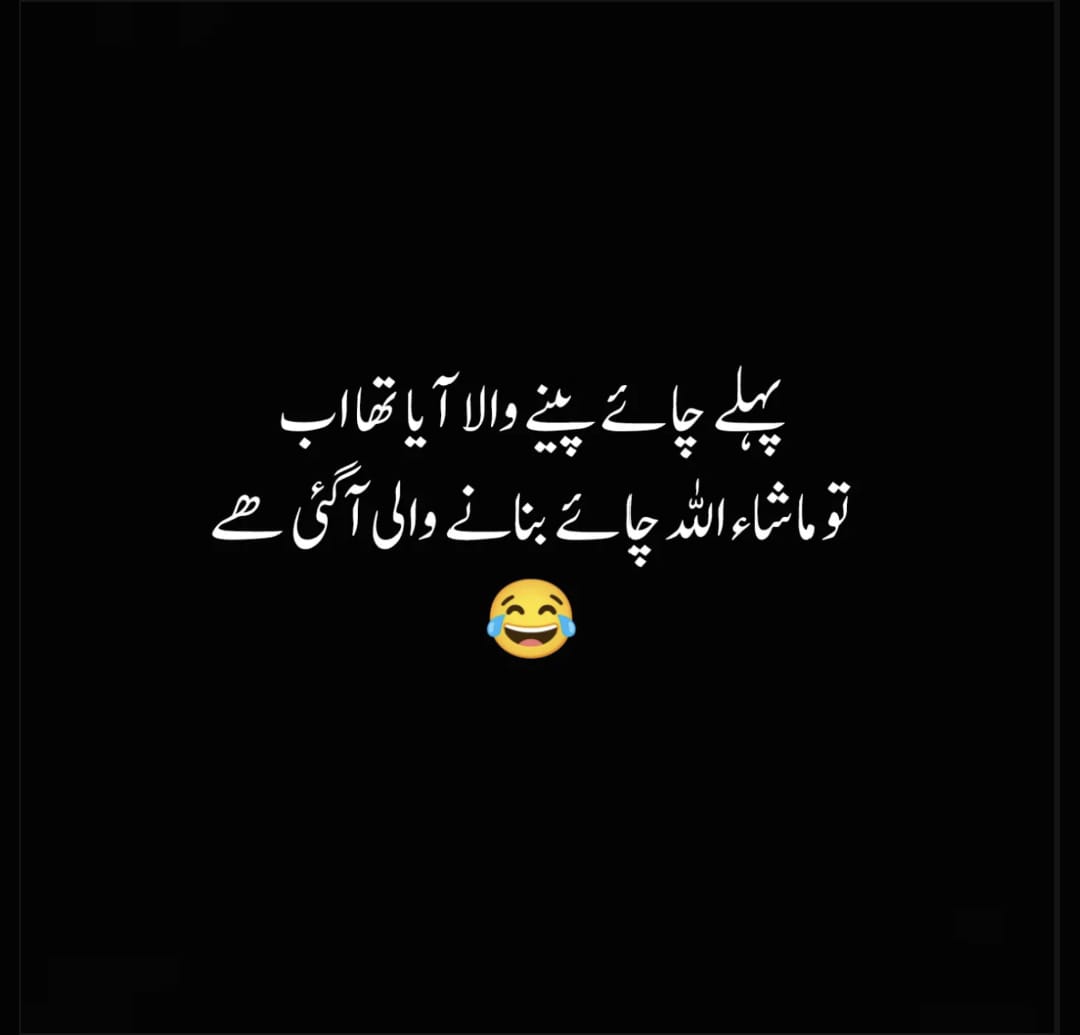
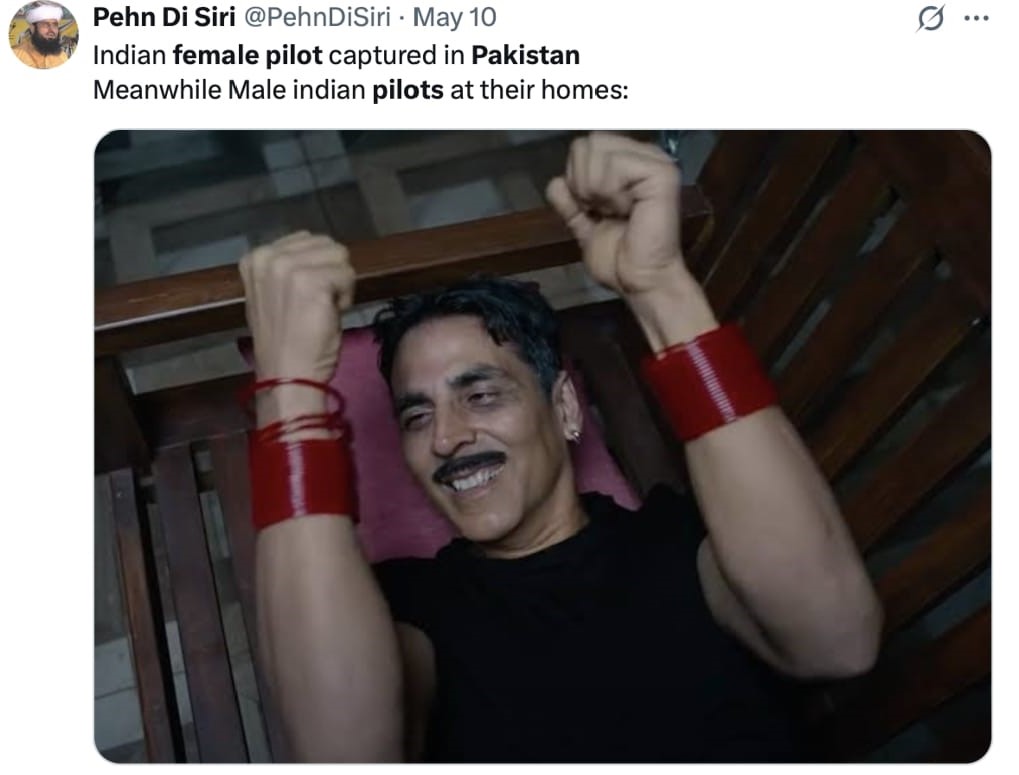
Sexism and misogyny-driven humor and memes were propagated by Pakistanis on social media as well. As soon as the name of Operation Sindhoor was revealed, Pakistanis made sexist jokes around consummating the marriage and/or making these wives widows. When fake news about the capture of a female Indian pilot spread on social media, sexist jokes were made about the appearance of the pilot and stereotypical gender roles. A social media post said that after capturing a male pilot who was served tea, Pakistan has now captured a pilot who will make the tea.

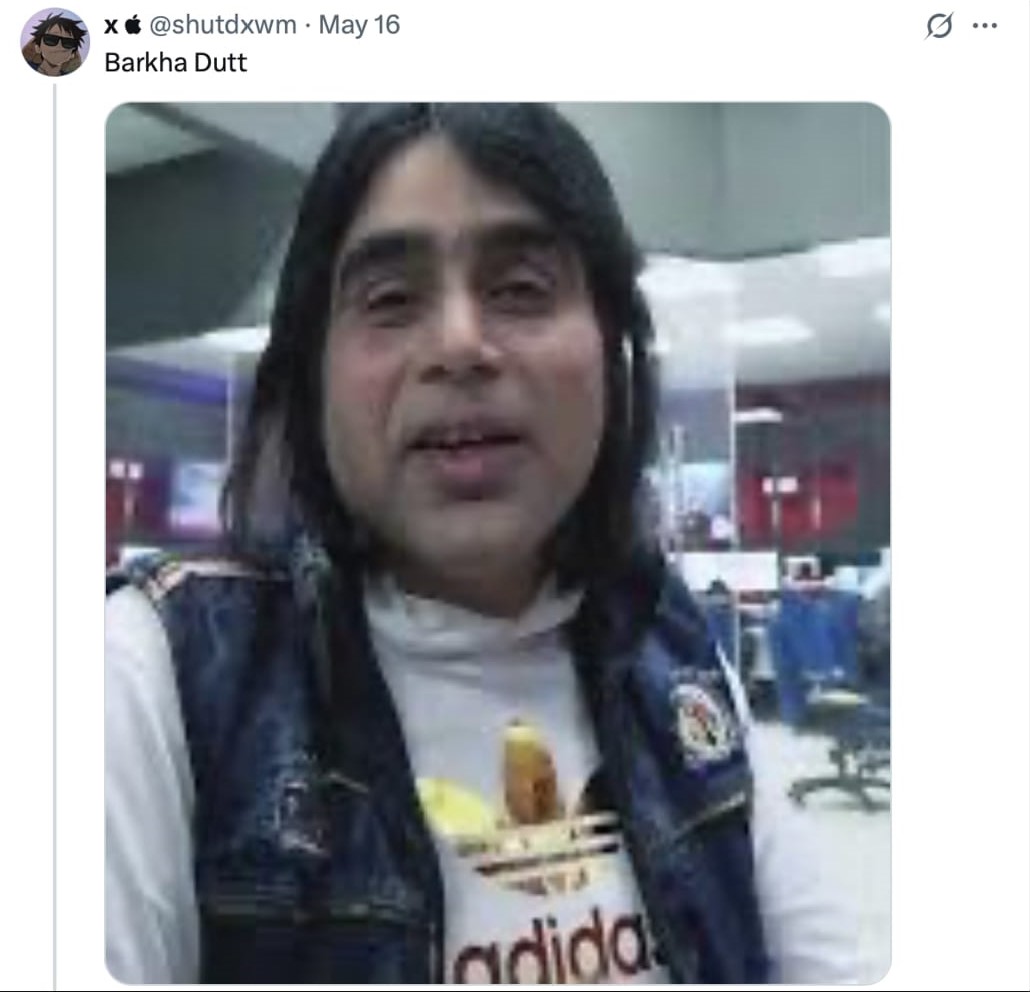
Along with the Indian female pilot, Indian journalist Barkha Dutt was also trolled for her appearance after her participation in a talk show with a Pakistani journalist and former foreign minister.
Another meme depicted Indian male pilots wearing bangles to mock societal gender norms.
In Pakistan, various politicians and religious groups also propagate misogynistic and sexist views with impunity while getting away with it, of the country’s internalized misogyny and gender stereotypes. Pakistan is a long way from achieving gender equality, ranking last on the World Economic Forum’s gender parity report for 2024. 28% of women in Pakistan face physical violence. Pakistan’s current defense minister, Khawaja Asif, called female politicians from the opposition party “trash and leftovers”. He had also fat-shamed a female politician by calling her a tractor trolley. Former Prime Minister Imran Khan had pinned the blame for sexual assaults on women and suggested they cover up. Former Minister for Information and Broadcasting Fawad Chaudhry had also made sexist remarks about politician Hina Rabbani Khar by calling her a low-IQ woman. Thus, sexist and gendered hate speech gains traction on social media as well because of entrenched misogyny and sexist political rhetoric.
Social media, instead of being used to call for peace, has become a vehicle for amplifying hate, particularly targeting women, and religious minorities. According to Dr. Maria Malik, assistant professor in the Politics department at Quaid-e-Azam University, “the events that unfolded as a result of a 4-day standoff between India and Pakistan in the first half of May 2025 seemed like we still have a lot to learn about pluralism, co-existence, and tolerance. Social media platforms were filled with tweets, posts, and memes, which seemed to have forgotten that both countries are home to religious minorities – Muslims being the biggest religious minority in India and Hindus the largest religious minority group in Pakistan.”
Misogyny and sexism were also expressed aplenty during the 2024 US presidential elections, in which the populist candidate Donald Trump won his second term. Among other insensitive and offensive things, President Donald Trump tends to pass remarks on women’s appearance in his speeches. During the 2024 elections, he commented on Kamala Harris’ appearance by saying that he is better looking than her. In one interview, Trump accused Kamala Harris of lying about her race by saying that she “turned black” someday. Trump’s followers take cues from his tweets to attack anyone whom he criticizes in his tweets, hence making Kamala Harris a target of sexist hate speech, too.
President Trump’s comments on women aren’t stylistic but deeply rooted in his political ideology. Masculinity and misogyny are the two features of President Trump’s “hegemonic populism”. Women’s interests and well-being, such as their reproductive rights and health, are put at risk by the policies and beliefs of President Trump and his Make America Great Again (MAGA) movement supporters. Trump’s vice presidential candidate, JD Vance, also expressed misogynistic views by describing the leading Democratic party women as a bunch of childless cat ladies who are miserable at their lives and want to make others’ lives miserable too.
A similar trend of the rise of populism, misogyny, and online gender-based violence is observed in European countries as well. A study of the 2024 European elections revealed that women politicians faced 80% more hateful comments on TikTok than their male counterparts. These hateful comments included objectification based on age and gender, and some even resorted to name-calling. A study of Spain’s Conservative Vox party revealed that people who have sexist beliefs also tend to have populist beliefs, and this connection could make parties that oppose gender equality use populist ideas as well. This also shows that populists capitalize on people’s sexist views to appease their voters.
The above discussion shows that name-calling, fat-shaming, gendered hate speech, and toxic masculinity are perpetrated by both populist leaders and social media users. The convergence of digital technology, ideological extremism, and populist politics presents an urgent challenge that transcends borders. This is even more harmful, considering that echo-chambers on social media reinforces already existing biases against gender and religious minorities.
Dangerous rhetoric of political leaders and disinformation of media outlets can culminate in real-world violence and long-term social fragmentation. Social media platforms, which have enabled previously marginalized voices to speak up, have also become battlegrounds where disinformation and hate speech go unchecked. Without concrete steps to hold digital actors and politicians accountable and counter the culture of impunity, hate speech, and gender-based violence will remain entrenched features of both online discourse and political mobilization. Regulatory bodies and civil society must work to demand stronger and transparent content moderation policies and support mechanisms for targets of online abuse. Social media companies should assess the impact of hate speech by political and religious leaders and bring content moderation policies in line with international human rights best practices and norms. The content that incites violence should be banned outright and alternative information to the fake news should be provided to the users.
