
WhatsApp Ads Invasion
June 17, 2025From Censorship to Cyberhate: The Digital Siege on Balochistan By Asma Tariq
June 19, 2025
Zainab Durrani is a lawyer by education and a digital rights advocate and researcher focusing on gender, TF-GBV and the right to privacy.
Since the initial Partition of the subcontinent, nearly eight decades ago, the status of India and Pakistan has gone from separated siblings to nuclear nemeses. Both countries fall within the largest populations in the world, with India beating out even China for the number one slot, while Pakistan ranks in at number five in the global order. So essentially, a grand total of approximately 1.6 billion souls hang in the balance any time these two warring neighbours clash.
Given these grim numbers, the need for tact, delicacy and most crucially, verity becomes immensely heightened. And yet, in the context of this past May, disinformation was a key pattern across the board in terms of the messaging coming from both countries and their citizens. Rage fueled by archaic notions and primal fear spilled out on online forums, most noticeable of which was on X/Twitter.
Background:
On 6th May, this year, India and Pakistan went head to head in a series of escalations that are outrightly the sharpest jabs the two countries have thrown at each other since the early aughts. While the on-ground aggression worsened with every nightfall of this 4-day long standoff, the online spaces, particularly X/Twitter, set the stage for a digital battleground rife with computational propaganda. With Pakistan removing its 14-month ban on access to X/Twitter, citizens flocked to the social media site not only for minute-by-minute updates but expressing themselves in an emotionally turbulent time as well. This decision came through in a bid to retaliate to the ‘narrative war’ as per the Pakistan Telecom Authority (PTA) Chairman, who informed the Senate Committee on IT and Telecom on May 7th. The ironic timing of this decision, when access to the platform was blocked for well over a year in the wake of the country’s contentious general elections, was not lost on many. The principles of convenience and arbitrary decision making have long ruled the roost here, as long as it favours the powers that be.
It is also pertinent to note that Pakistan’s internet freedom rating is at 27 out of a total of 100, as of the 2024 Freedom on the Net report. The country has never been designated as ‘free’ in the many years it has been ranked. And yet, when it came to competing with India, our government chose to ‘unleash’ the very same citizens that a day prior did not seem to deserve this access to a basic and globally recognized right.
Comprop/Computational propaganda:
Computational propaganda, which was heavily deployed in this instance on both sides, is a political communication tool that employs the use of algorithms and tech to disperse uncalibrated data and serve vested interests. Bots are a critical component of this form of warfare, especially if tasked with portraying large-scale consensus of a certain narrative by flooding platforms with on-brand messaging. In this instance, heavy use of the same was observed and reported in conjunction with active participation from real people with the very real tendency to inculcate and then project bias.
From anecdotal evidence alone, it was obvious that the sheer degree of hate that a sizable number of Indian-presenting accounts were spewing, was a shock to the system of Pakistani users. Given that bilateral relations have deteriorated, sometimes marginally improved and mostly hit rock bottom at least over the past few decades, the standard reason for engagement and friendship for Indian and Pakistani folks has been foreign, neutral shores. These friendships, given the many similarities in culture, context and traditions, have been fast and held on to dearly. In stark juxtaposition, the online interactions during the aggressions, calling for blood, for utter destruction, using vile and dehumanizing language, were eye-opening to say the least. The radicalization of certain sections of the vast landscape of India has been an ongoing project and is emblematic of the Modi regime.
On the other hand, the employment of tired, phobic tropes belittling the sacred cow, of chest-thumping, violent proclamations from jingoist Pakistanis, of making women take the brunt of this verbal aggression repeatedly through our choice of language has been deeply embarrassing to witness and even worse to claim.
Incendiary and patriarchal language:
On both sides of the Radcliffe line, women and those along the spectrum live in mortal fear of harm. The Global Gender Gap Insight report from 2025 places India at 131st place and Pakistan at the rock bottom out of 146 countries ranked globally. No data scientists are required to break this one down. It’s undeniably bad to be femme in the subcontinent.
The same is the case on the theme of digitized patriarchal repression, as noted by the Digital Rights Foundation in its 2024 Cyber Harassment Helpline report, 3171 complaints were registered with the Pakistani organization in 2024 alone of which 56.4% were from women and members of the transgender community.
Despite the homespun movements by brave individuals on either side of the border, such as Aurat March and the Gulabi Gang, to highlight the impact of an overarchingly patriarchal framework governing systems and behaviours, we see pink washing, we see the coining of the term ‘Operation Sindoor’ and we see the fallout on either end, in petrifying comments and ugly emotions coming through. For a state to choose Sindoor (red vermilion) as its rallying cry, when the corridors of war, vanquishing and conquest carry a storied history of gender based violence as a means of compounding subjugation, is testament to the seemingly disposable nature of women and gender minorities in South Asia.
‘Is it not ironic that women, the vast majority of whom are otherwise marginalised in their cultures and cults and also face structural patriarchy, suddenly become a vehicle for sending strategic messages?’ writes Dr. Rakshinda Parveen in an op ed, where she goes on to note that the messaging from India follows the same tropes women of the subcontinent have to face in their everyday lives: that women’s honour will be garrisoned by artillery, not agency.
Overall, just the difference in the scale of hostility between the previous notable escalation in 2019 following the Pulwama attack and now has been deeply concerning. And again and again, we circle back to the clear reason why: the dogma being widely distributed that is going unchallenged.
Role of AI in Modern Warfare:
When it is this entrenched in our every day now that you can seldom go without hearing or engaging with AI, it is only natural for it to have played a role in an episode of such significance, as well.
We saw the generation of imagined content furthering existing narratives that were being pushed, we saw posts putting their own spin on things that we shared ahead without verifying. We ‘saw’ leaders of either country apologizing, conceding defeat through deepfakes. And we saw the hyper-reliance on Grok.
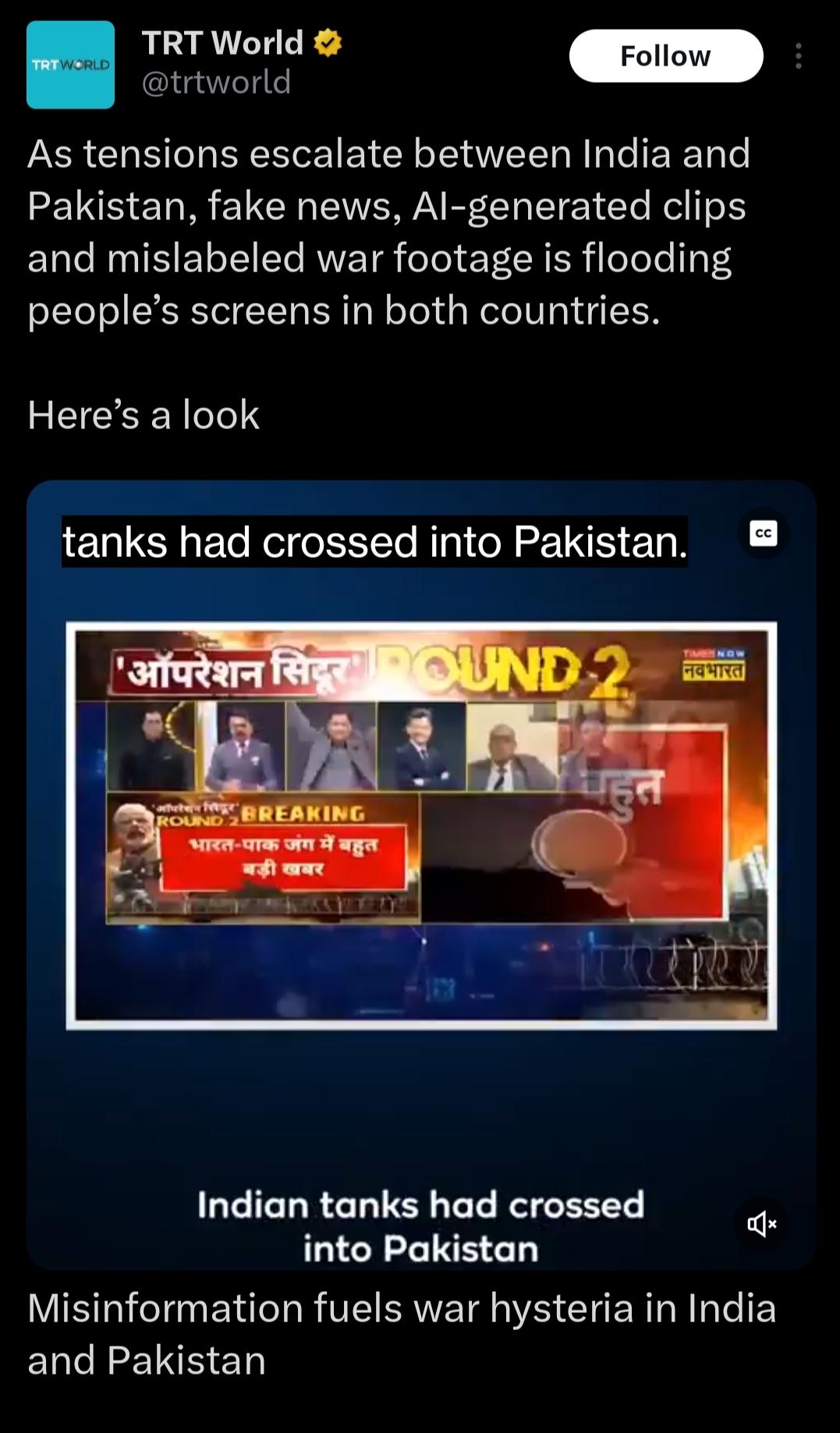
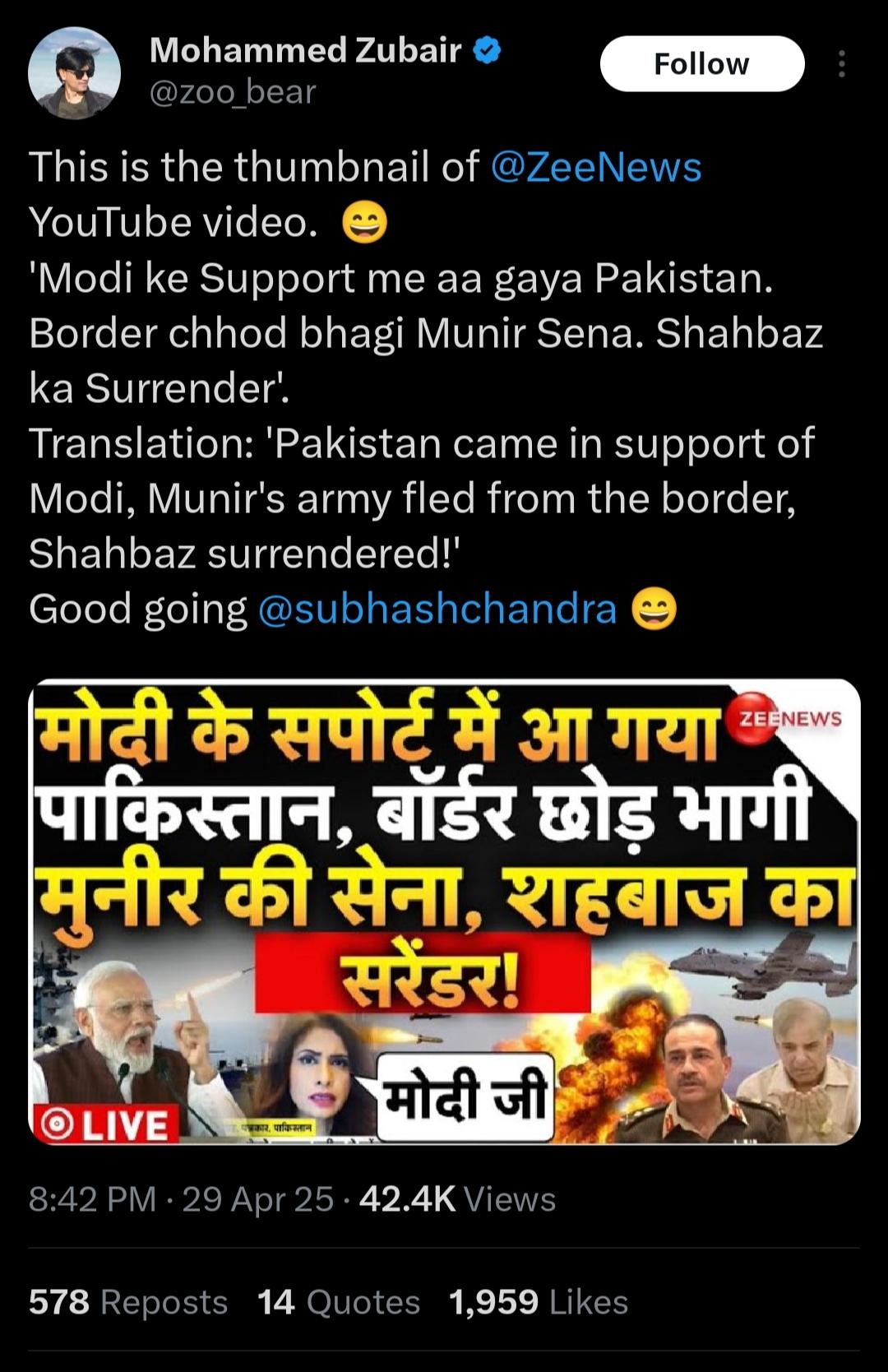
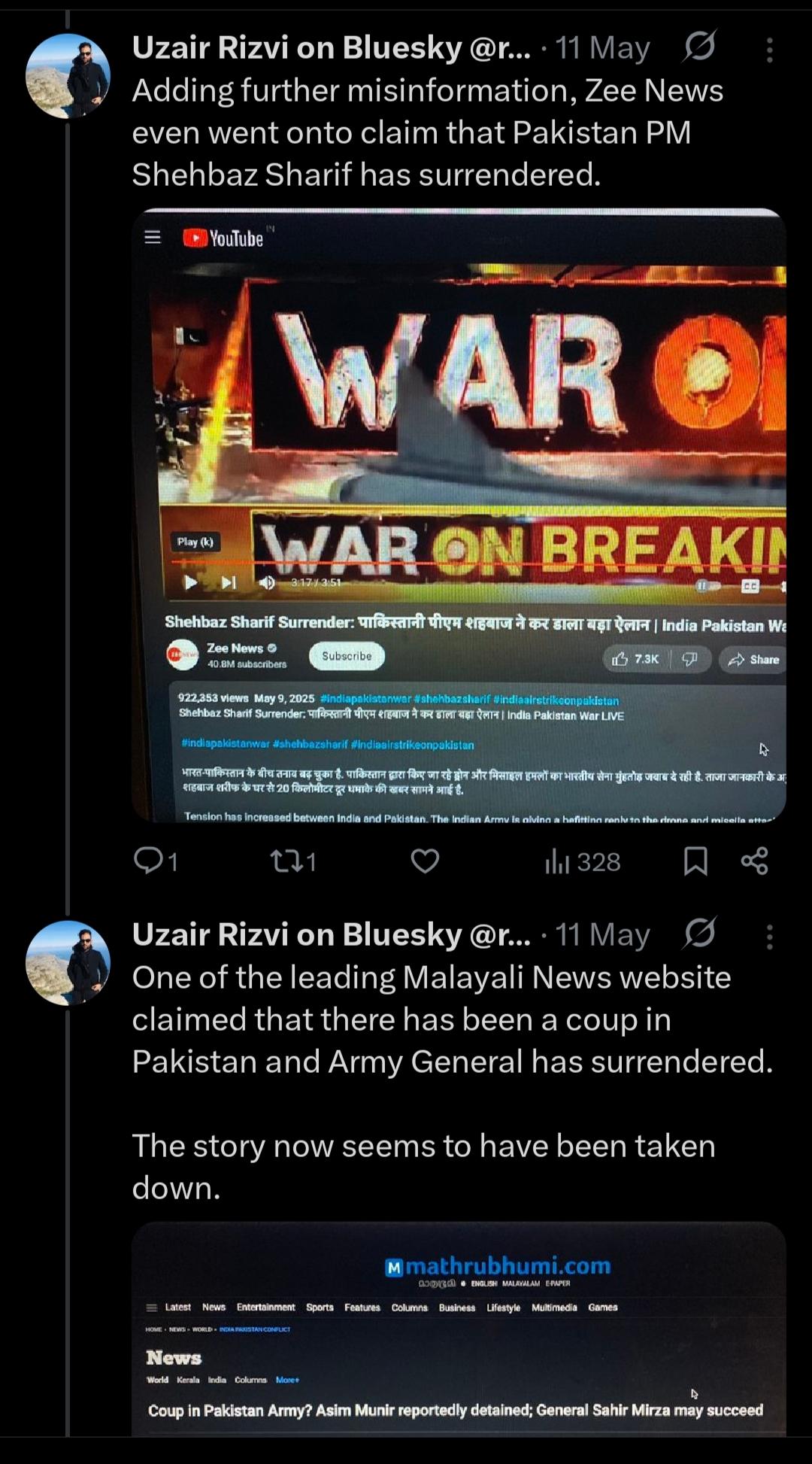
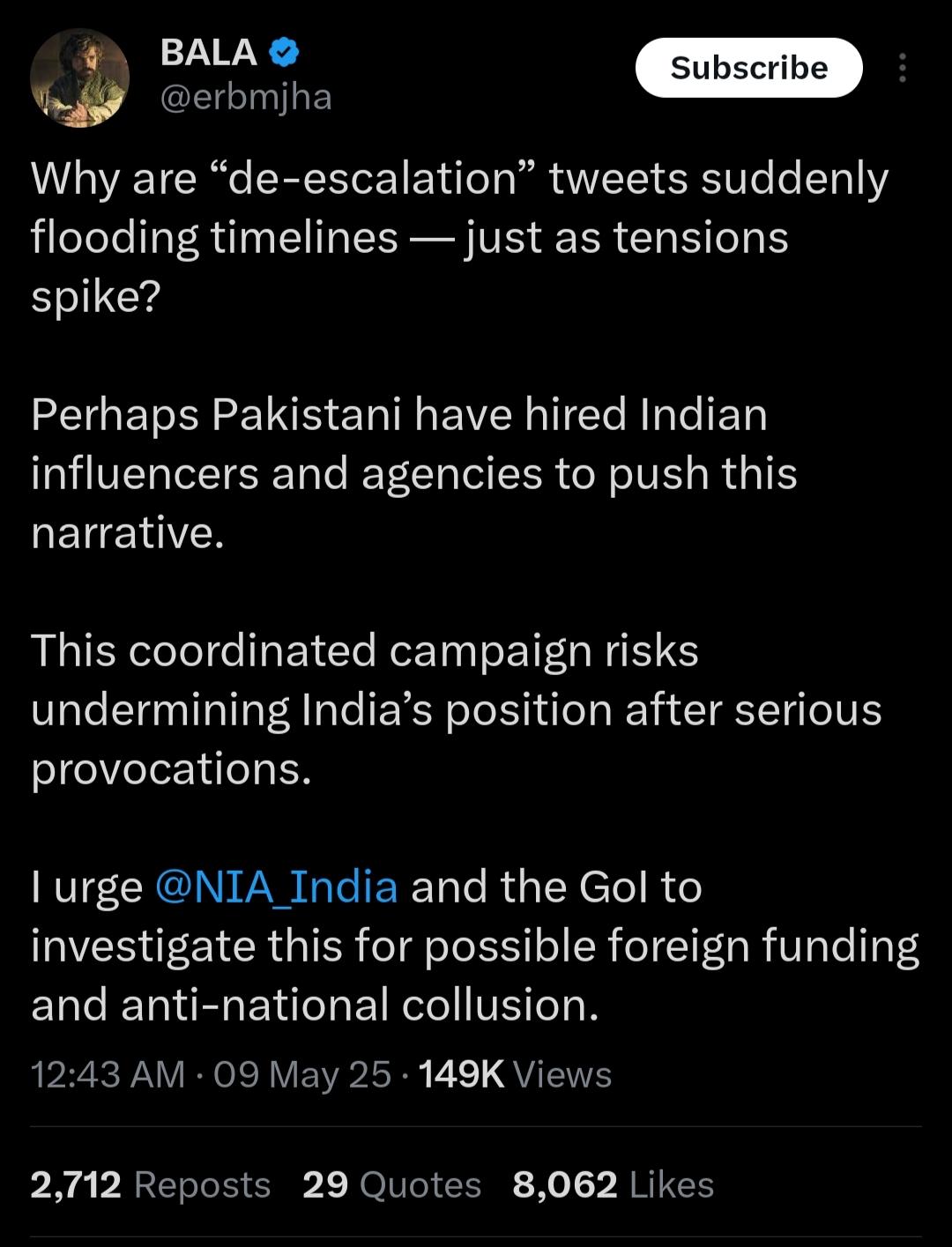
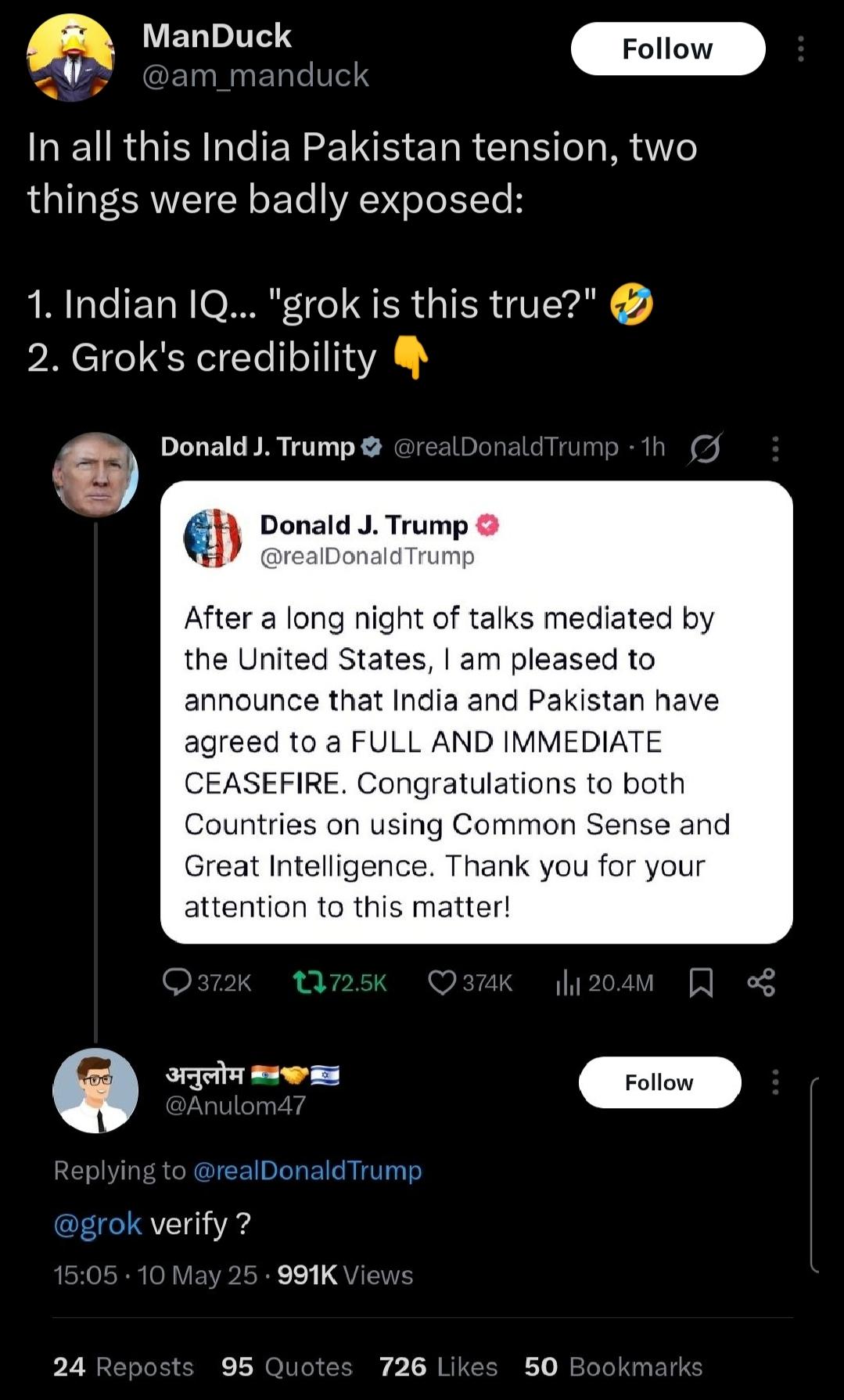
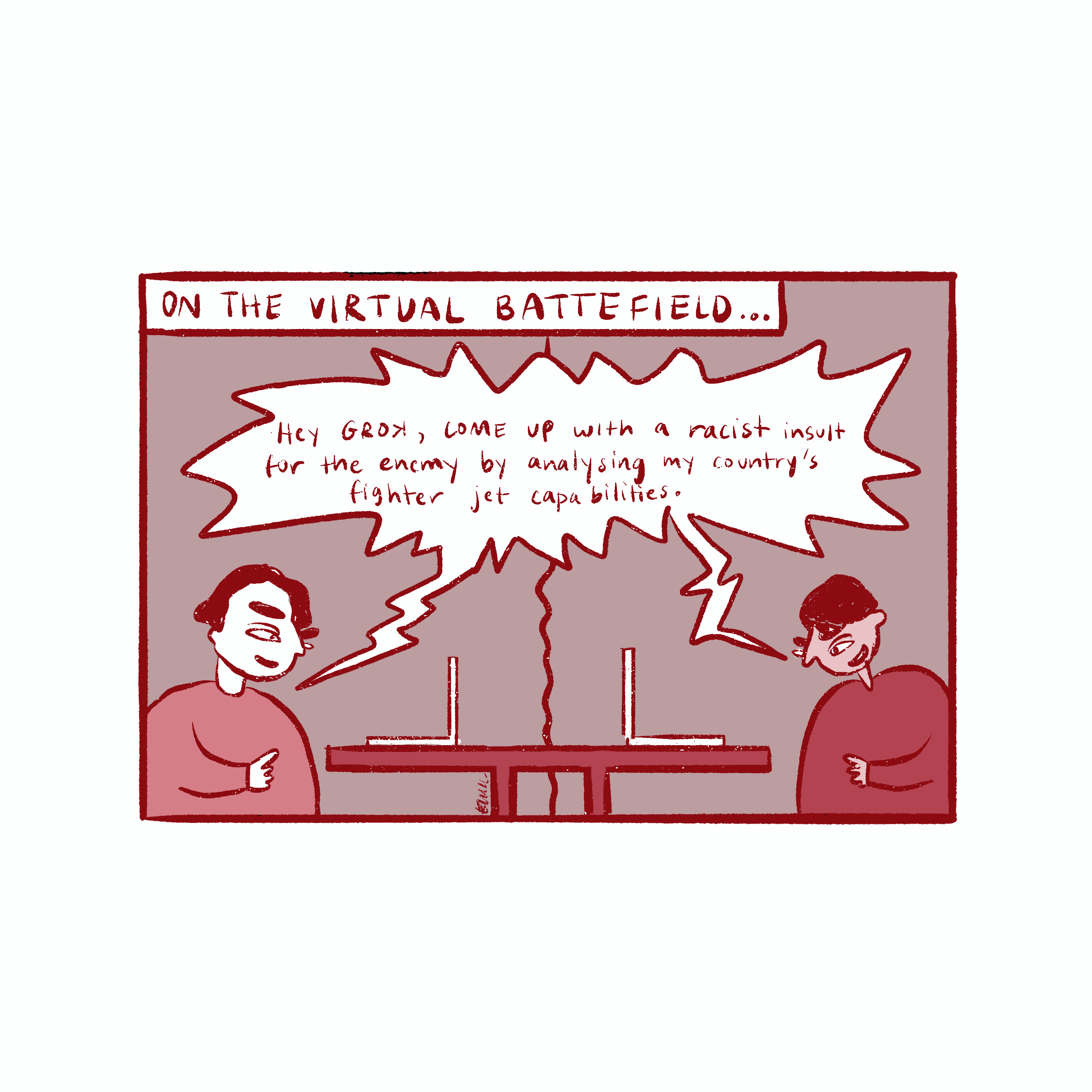
Grok, Elon Musk’s AI bot, appeared to be a personal butler to those authoring and engaging with the mammoth number of warring threads, tweets and retweets exchanged at this time.
The human need for convenience by taking information from the nearest, easiest source and our undying need to shout into the void have replaced common sense as our tool for reasoning. Simultaneously, the rise of AI as our shepherd has turned tides massively for anyone who benefits from propaganda making.
It is key to remember that any generative AI chatbot is only as good as the hands that built it and the data provided to it to learn from. Because we live in the world we do, because we have lived through the COVID-era disinfodemic, there is no viable reason to believe that any information that is coming in is not impacted by bias or motive.
In the same vein, in mid-May, NBC reported that Musk’s Grok began to add unrelated text to its responses to users, highlighting white farmers being targeted and killed in South Africa. These responses by Grok were later found removed. It is relevant to state here that Musk was born in South Africa to a Nazi-aligned, apartheid supporting ancestry.
The reduction of human fact-checkers as a policy move across social media platforms, including Meta, is having a significant impact already and will go on to have similarly significant repercussions. Case in point is the role Grok played during the May escalations; the AI-powered chatbot frequently misread data (such as videos or images) as part of the active conflict when it was in fact coming in from entirely separate regions. Additionally, a research paper from the University of Luxembourg looking into the efficacy of Community Notes on X, which is what Meta intends to replace its fact-checkers with, found that while the Notes stemmed the flow of misleading posts by 61.4%, the method may be ‘too slow to intervene in the early and most viral stage of the diffusion’ as quoted by Al Jazeera.
While Grok, as per France 24 ‘ recently labeled a purported video of a giant anaconda swimming in the Amazon River as “genuine,” even citing credible-sounding scientific expeditions to support its false claim.’
This year, the Tow Center for Digital Journalism at Columbia University analysed eight generative AI search engines. One of the highlighted findings was that ‘Premium chatbots provided more confidently incorrect answers than their free counterparts.’ In essence, while they noted that chatbots were reluctant to not generate answers and would answer incorrectly or speculatively instead, the paid versions it appears are even more eager to be valuable to their inquirers and thus even more dangerous to depend upon.
That reliance at all is placed on a non-sentient, non-reasoning database that will churn what it is fed is ludicrous and yet it is the current world order which only promises to worsen with time.
Technology very clearly adds fuel to the existing dumpster fire of human behaviour. It scales up the impact of abuse, vilification and harm.
Superficial digital interactions in this ‘4-day war’ managed to fuel a channel of expression that seemed to be guided by anything but restraint. The spillover of rigid, fundamentalist voices underpinning the idiom of ‘a little knowledge is a dangerous thing’ came up frequently in this digital version of a battleground. Seismic events impact online spaces with proportionate force. Out come the flag bearers of righteous causes, facts be damned. It is hate that propels the conversation, that centers the verbal attacks. Hate that has been sowed by supremacist, fascist, authoritarian and patriarchal structures. Hate that seeks to tear down, to apply the very successful white imperialist strategy of divide and conquer.
However, in the face of this very hate, it is critical to keep an outlook of progress. To amplify the now scant voices and outlets that center truth and objectivity as their mission statements. It is equally critical to demand transparency and demand a participatory approach to how global digital governance is carried out. The immediate impact of the old analog world order dying out should not have been tech lords’ hegemony.
The advancement that we seek as a species cannot simply revolve around the building of more and more automated tools, but needs to be built around the concepts of autonomy, accountability and true democratic principles.
